
The Garden in June
Roses galore and a rush on planting annuals and dahlias before the rain

Welcome to my monthly post for all subscribers, with a mix of what’s happening in my own garden and the jobs that you can be doing in your own gardens.
Roses
We’ve had a mini heatwave here in the UK which has brought everything cascading into flower at once. The roses are out in full force a good week earlier than they were last year, the hot temperatures shortening the life of each bloom - and in the cases of the yellow or apricot roses, bleaching their petals almost as soon as they emerge. I’ve been deadheading madly, and thank goodness we’ve had cooler temperatures this week with plenty of rain so hopefully the second wave of blooms will have longer on the catwalk.
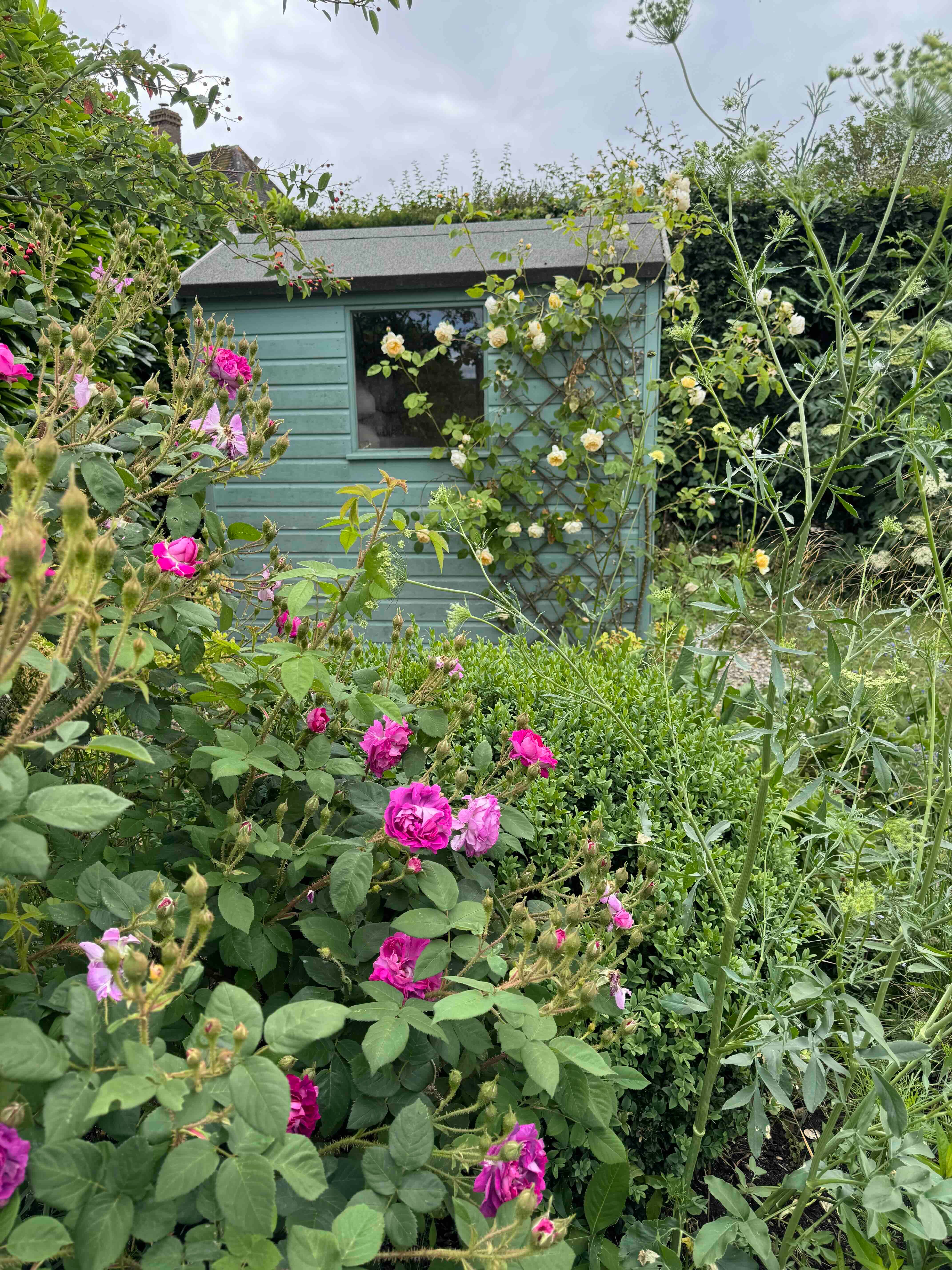
I now have at least 10 different roses dotted throughout the garden, some given to me, some additions that I have planted in the last couple of years. Two were gifts from my late mother in law - ‘Jude the Obscure’ clambers over the shed while the unnamed patio rose that she correctly told me was a climber, winds up an arch to meet ‘The Generous Gardener’ in a romantic tryst.


I fell in love with ‘Tottering by Gently’ in a friend’s garden and bought two for the back border to lighten it up in early summer. One is doing much better than the other so I need to give the smaller one some TLC - a mound of compost perhaps to help it catch up. The stronger, properly tottering one is covered in a mass of single butter-yellow blooms that in the heat were fading to parchment-white almost as soon as they emerged.


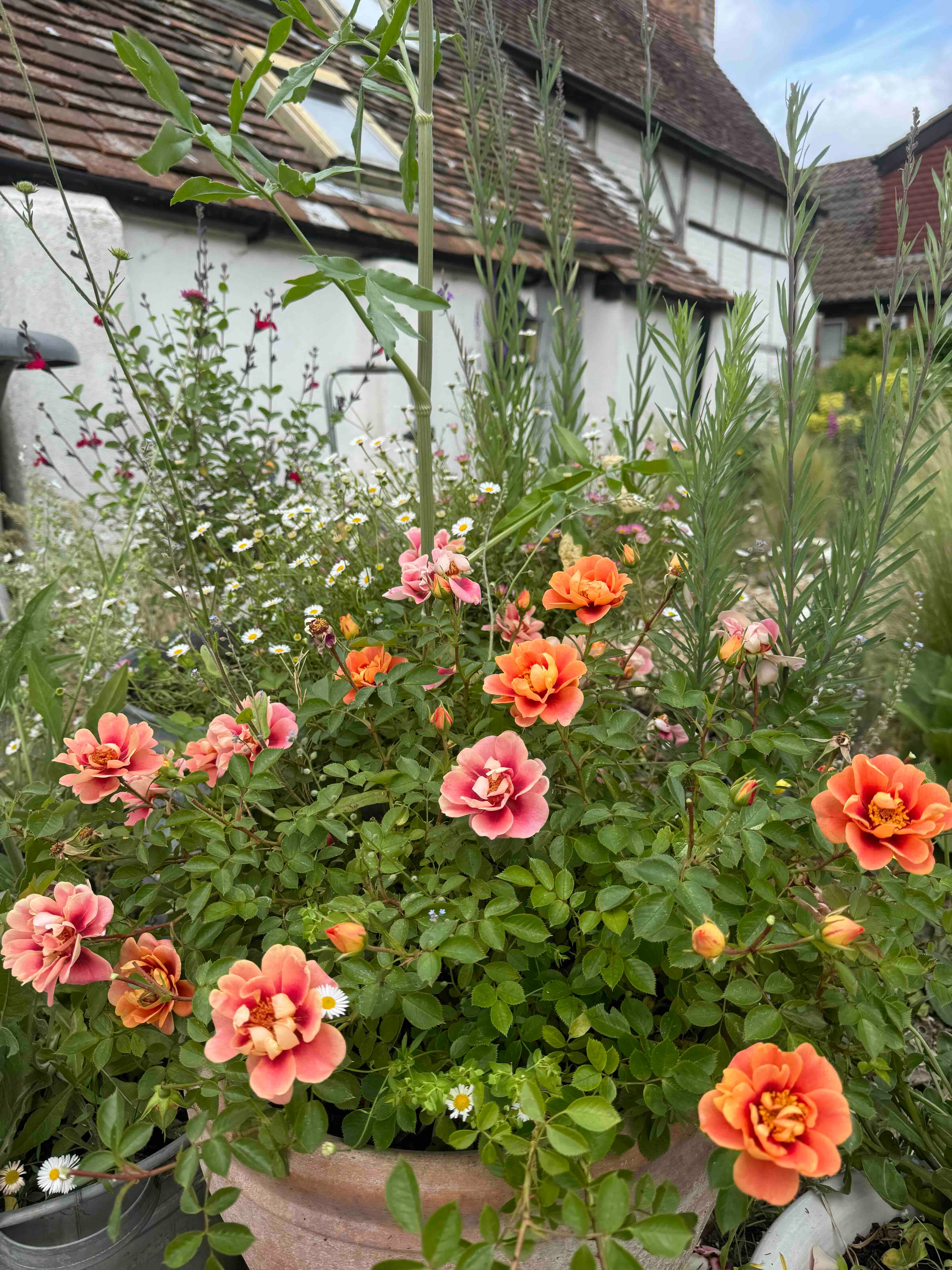
I bought two persica roses when I visited Pococks nursery last year. The most floriferous one is doing really well in a pot: the eye-catching tangerine-orange ‘Bernstein Rose’. I imagine it’s not everyone’s cup of tea as it’s a very punchy colour, but I love it. The blooms fade to a softer, paler apricot before going over. It gets prime treatment as it’s right outside my kitchen where all the pots get frequent washing up bowls of water, and I’ve also been feeding it with diluted kefir. More on that later. The other one, ‘For Your Eyes Only’ is taking a while to get established in the cottage garden at the front of the house, and has only produced a few small blooms so far.
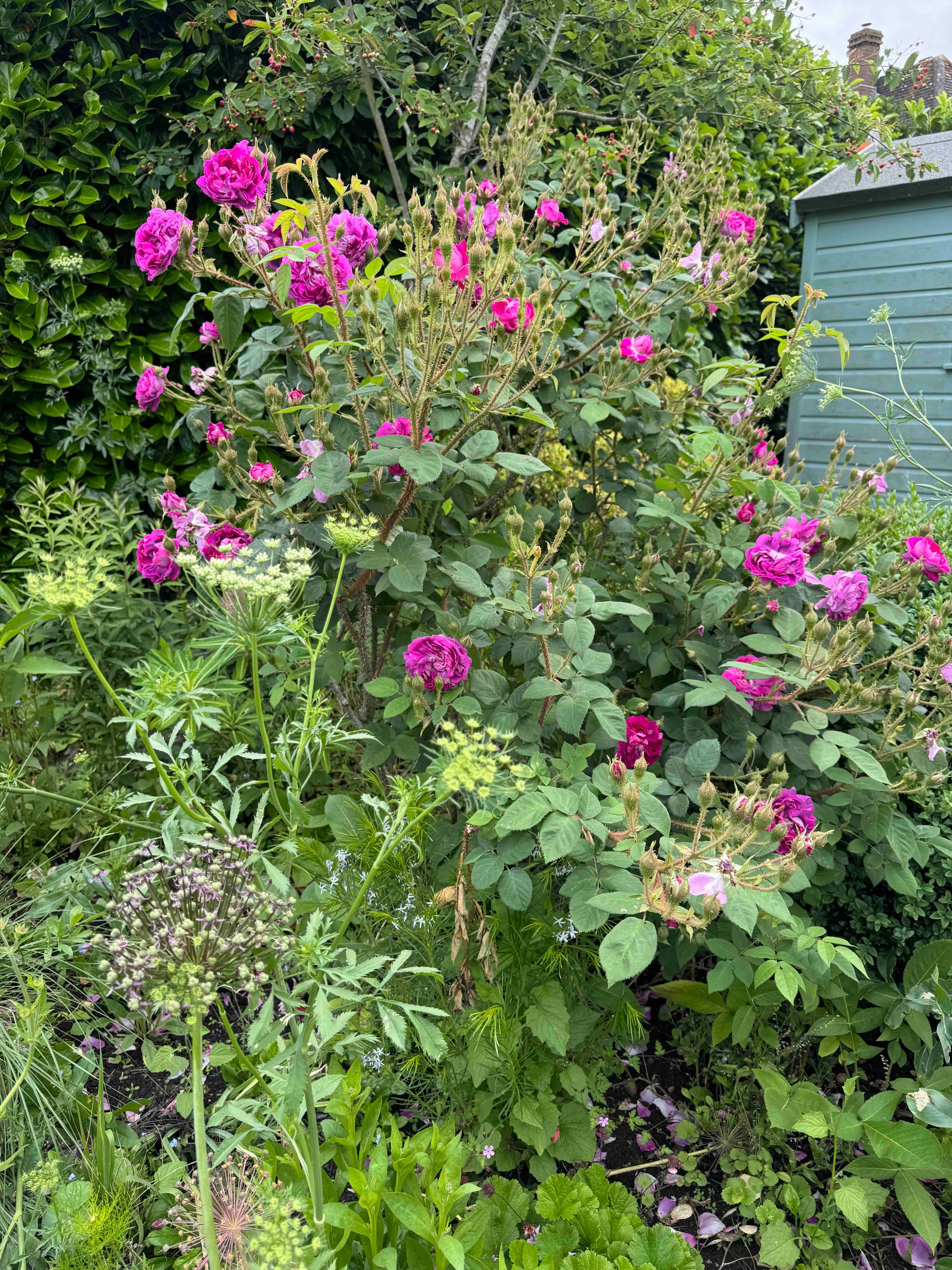
I have two old roses, the spectacular moss rose ‘William Lobb’ which I only really got to grips with pruning correctly early this year after going on an excellent rose pruning course held by David Austin Roses at Highgrove. After that, I had the courage to really prune it back hard, and it seems to have worked a treat. Having said that, I didn’t get round to pruning ‘The Generous Gardener’ and that is also absolutely covered in blooms, so maybe it doesn’t matter if you miss a year.
The other old rose ‘Charles de Mills’ is in the front garden, with tightly clustered, flat-faced blooms in dark magenta, the colour of an old smoking jacket. He looks very distinguished standing next to a grey-green mound of Teucrium fruticans. The old roses flower only once unlike modern hybrid roses like the David Austin English roses, which have been bred to repeat flower over the summer. The old roses have such classically gorgeous flowers with strong scent, so it’s nice to have a mixture of both.
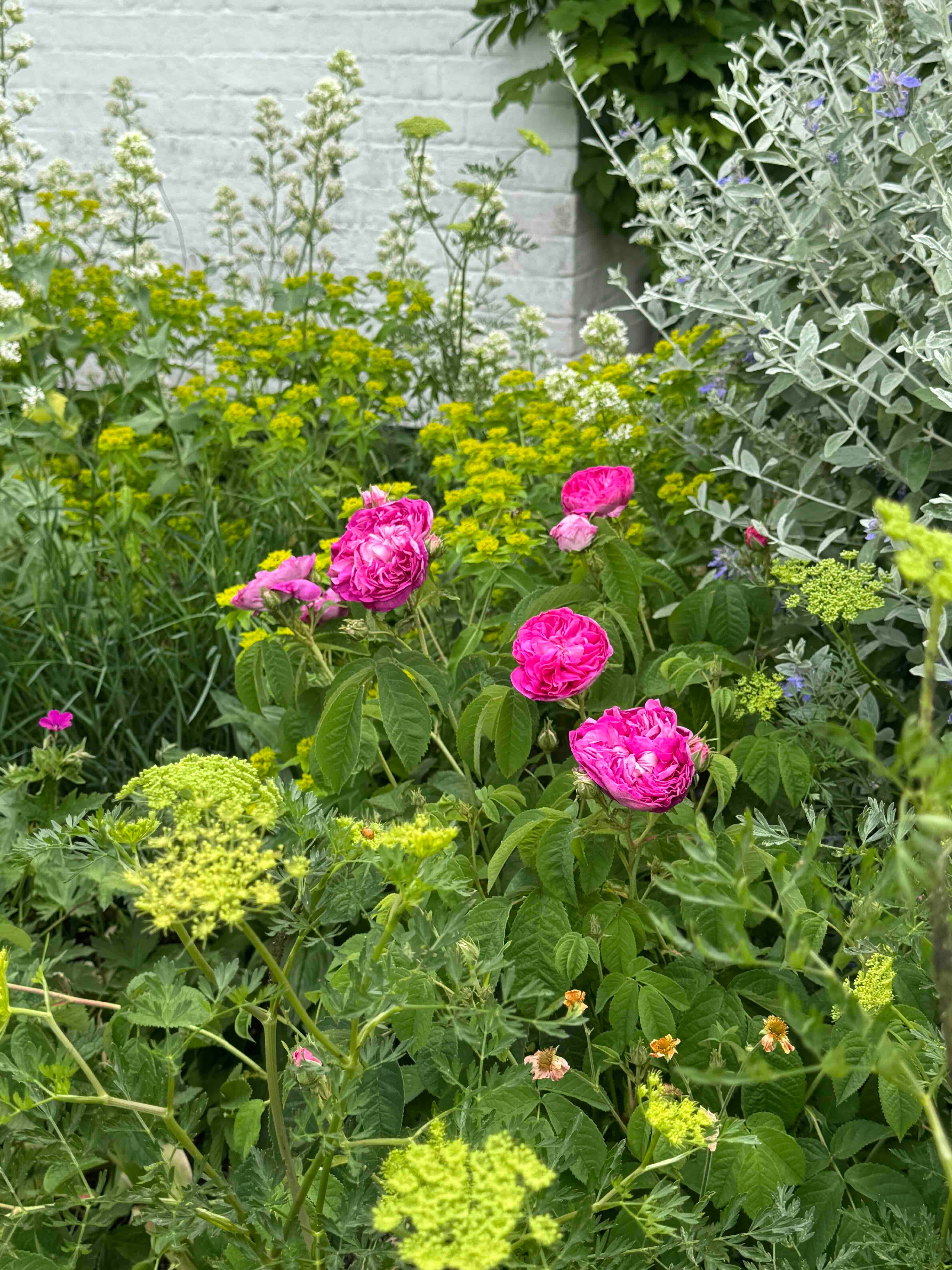
On the wall at the side of the house I have a climbing ‘New Dawn’, brought with us from the previous house, and the final two to mention are the floribunda rose ‘Silver Wedding’ which a friend gave us last year, and David Austin’s 2024 rose launch ‘Emma Bridgewater’ which they sent me to trial. Both were planted in the front garden last autumn, and are still finding their feet with a just a few perfectly formed blooms.


The vegetable garden
I’m trying to do better than last year in the veg garden, which has involved a lot of watering. I bought so many seeds from Real Seeds this year and I’m annoyed at myself at not having had time to sow many of them. I have a mixture of Brussels sprouts and calabrese doing quite well under hastily made hazel cloches, having watched a video of the very watchable Troy Scott Smith making some. Mine don’t look nearly as good but they have kept the pigeons off so far. I’ve been watering these and the lettuces with my homemade nettle tea as both are nitrogen-hungry crops that benefit from the leafy-power-boost of the nettle elixir.
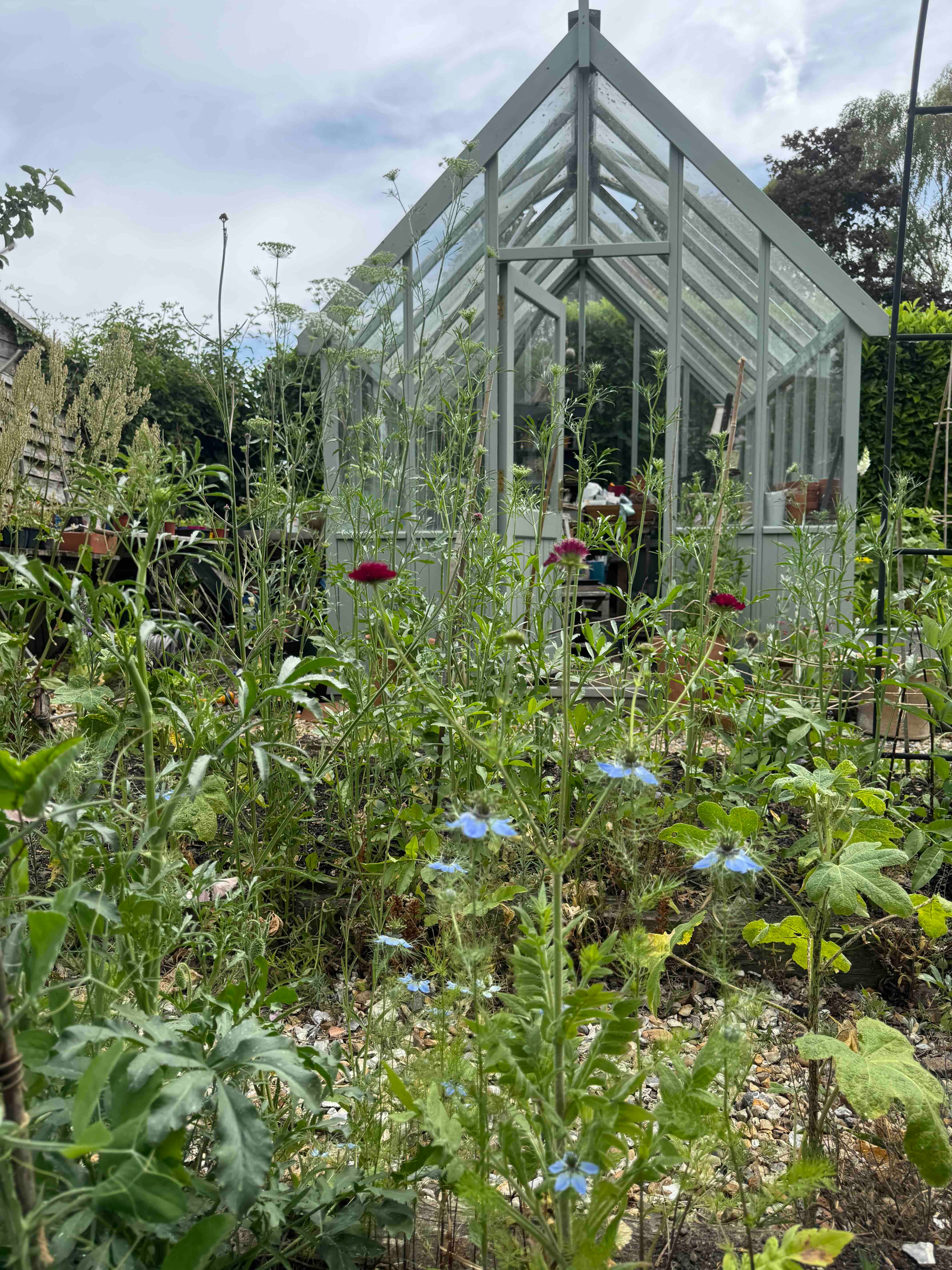
My courgette and squash plants got caught in one of those unexpected frosts - I’d taken them out of the greenhouse and forgot to put them back in at night, a fool’s error. But the frost had nipped only at the edges of the leaves, and they seem to be doing fine now they are in the ground, although sometimes I worry that they won’t ever get going properly after that early setback.
The French beans were also caught by the frost and are looking very sickly, with pathetic, thin fronds that are barely winding round their canes. I keep thinking about replanting some more straight into the ground but haven’t got round to it. At the beginning of June, there is still just about time to do it.
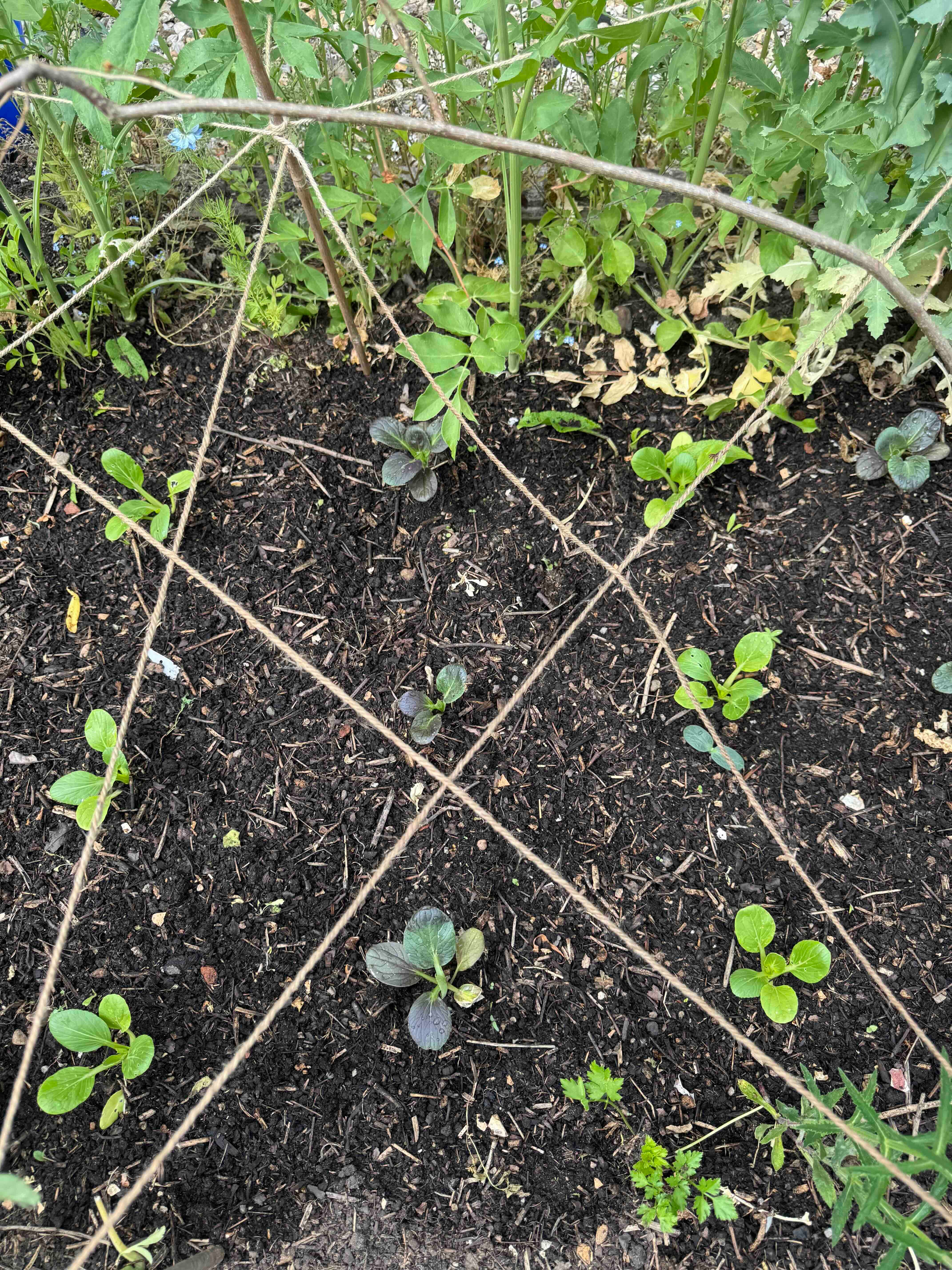
Other things I’m growing this year include pak choi that was a garden centre grab last week. I feel bad doing this when I have so many seeds sitting there but there just aren’t enough hours in the day!
June garden jobs
Planting out: one of the most time consuming jobs at the beginning of the month is to plant out all the seed-grown plants and the dahlias I’ve started in pots. This week I’ve planted dozens of dahlias and cosmos, as well as scabious, phlox and zinnias. I’ve also started planting up my summer pots. And then everything needs watering - not just once but consistently until they have established. This week we’ve had some welcome rain, so I sped up the planting to get as much in as possible before the rain to save that initial flurry. Watch out though, as it’s easy to think things have been deeply watered when all they have had is a brief shower. We had consistently dry weather here for at least two months, so the soil was bone dry and it takes a massive amount of rain to properly saturate it.
Weeding: little and often is my motto. If you’re watering your vegetables you will also be watering the weeds, so keeping on top of them is crucial. Ten minutes hoeing saves a whole lot more time pulling knee high weeds out in a few weeks’ time, and even tiny weeds clustered round your precious crops will be taking nutrients and water away from them.
Pinch out tomatoes: this is one of my favourite evening jobs. I water the tomatoes in my greenhouse, and then search for shoots to pinch out on the joints between the main stem and the leaves. You need to do this on the tall cordon types and not the smaller bush tomatoes; if you don’t do it on the cordon types, the plant becomes unruly with masses of side shoots and not much fruit. It’s a task that can become obsessive, and it’s amazing how easy it is to miss one, to find it already huge a week or two later. Watering tomatoes regularly is also really important - if you do it sporadically, the tomatoes can get blossom end rot, which manifests as an unattractive brown blotch at the bottom of the tomato. One final tip is to feed every couple of weeks with a potassium based tomato feed or seaweed fertiliser as soon as the flowers go over and the tiny fruits have set.
Prune spring-flowering shrubs: I have two spring-flowering viburnums that need to be pruned as soon as possible - they flower on old wood (last year’s growth) so if you leave it until the end of summer you’ll be hacking off next year’s flower buds. Take out any dead or diseased wood, and anything in the middle of the shrub that makes it look congested, and then if you want to keep it to a manageable size, cut it back to the size and shape you want, trimming just above a strong, healthy pair of buds.
Emergency staking: my ammi plants have suddenly rocketed up and at over six foot, they have started toppling in this week’s heavy rain and wind. I stake them with canes and string to keep them upright, and do the same with anything else tall and willowy that is looking a bit wobbly.
Chelsea chopping: if plants like geraniums or origanum suddenly start collapsing from the centre leaving an unattractive hole in the middle, chop them back brutally to see if you can get another flush of growth and flower. I have recently had to do this with the geums, which went over very quickly in the heat.
Feeding plants: as I mentioned earlier, I have been using nitrogen-rich nettle tea to feed brassicas, lettuce and chard, and I have also used it to give my courgettes an initial boost before the flowers and fruit start developing. Using too much nitrogen-rich feed will encourage too much leafy growth at the expense of root and flower, so later feeds should be potassium-based fertilisers like seaweed or tomato feeds. I also use diluted kefir as a feed as it contains beneficial Lactobacillius bacteria that help to break down organic matter in the soil, making nutrients more readily available for your plants. I also use it as a foliar spray to help fight fungal diseases like rust and powdery mildew - and I have proof that this works. I suddenly realised that two of my hollyhock plants were badly affected by rust, which had spread all the way up the stems. The plants were starting to flop so I gave them a couple of doses of diluted kefir and they are now recovered. The rust spots have even changed colour. I’m now making double quantities of kefir to feed my plants as well as myself.
Thank you for reading this month’s post. Next week paid subscribers will be hearing about two interesting garden visits I made last week. The gardens were polar opposites: one an arts & crafts garden with incredible structure and an interesting history and the other a cottage garden with so many inspirational planting combinations I didn’t know which way to look.
Until next week.
Clare x
Thank you for telling us about your roses. My Generous Gardener was also prolific here on the Sunshine Coast of the Salish Sea. I was thinking it was my fertilizer programme but perhaps not. It has been brutally hot here also so everything is going over quickly but it is pouring rain as I write this. Can you give a formula for your kefir spray please?
It's certainly an annuals planting rush at the moment. My knees are creaking from constant kneeling this week. Nearly there - still some cosmos and snapdragons to go, then courgettes and kale. Your Silver Wedding rose is a very acceptable colour. A friend gave me a Ruby Wedding rose last year for that anniversary and my heart sank slightly, as I don't really like that shade of red. But last year and this it has turned out to be a warm apricot/orange, which I love. Obviously a nursery mistake, and my friend is very annoyed, but I've persuaded her not to demand a replacement. Nothing to do with temperature I think, as last year was hot here, and this year has been very cool and wet apart from 4 days of 20-24C a couple of weeks ago.
The Teucrium fruticans looks so lovely and I was all set to think of it for my garden, but then saw it's only H3. Seriously considering moving south!